Deck of Cards Workout: The Rules, the Apps That Draw for You, and a Game That Picks the Moves
A deck of cards workout turns a shuffled deck into your session: each suit is a move, each card's value is the reps. Flip until the deck runs out. With face cards at 10 and aces at 11, that's 95 reps per suit. Apps flip for you. In SWADE's Runner, the track picks the moves and the camera checks them.
In this guide
- How the deck of cards workout works
- What face cards and aces are worth, and what a deck adds up to
- Picking your moves: four that don't fight each other
- Deck of cards workout for beginners: shrink the deck, don't skip cards
- Playing it with others
- Apps that flip the cards for you
- Deck, app or game: who checks the reps?
- Which one fits your situation
- SWADE: when the track deals the moves
- Your camera stays on your phone
- What this guide doesn't cover
- Frequently asked questions
How the deck of cards workout works
The deck of cards workout, also called the 52 card workout or the playing card workout, takes a deck you probably own and almost no planning: you pick the moves, the shuffle picks the order and the numbers. Ross Training, a training blog, says it first wrote about the workout around 2003. The rules fit on a sticky note.
- Shuffle a standard deck: 52 cards, plus the two jokers if you want them.
- Give each suit a move. Spades push-ups, hearts squats, and so on. Or just two moves: one for the red cards, one for the black. Write it on a note next to the deck.
- Set your values. Number cards are worth what they say; face cards and aces, what you decide (next section).
- Flip a card and do the reps. With the note above, a 7 of spades is seven push-ups.
- Flip the next one. Catch your breath when you need to.
- Stop at the last card, or sooner if your form falls apart.
You can't see what's coming, so you can't save yourself for the easy cards.
Verywell Fit's version plays against a timer you set instead. In the classic one, the deck is the clock: you're done when it's empty.
What face cards and aces are worth, and what a deck adds up to
This is where versions disagree. Ross Training counts face cards as 10 and aces as 11. Verywell Fit lets you choose: face cards at 10 or climbing, and aces at 1, 10 or 14. A 2024 thread on Reddit's r/bodyweightfitness climbs from jack 11 to ace 14.
Numbers 2 to 10 make 54 reps per suit; the other four cards do the rest:
| The rule | Jack, queen, king | Ace | Per suit | Whole deck, one move | Two moves, red and black: each |
|---|---|---|---|---|---|
| Flat tens, ace high (Ross Training) | 10 each | 11 | 95 | 380 | 190 |
| Flat tens, ace low (a Verywell Fit option) | 10 each | 1 | 85 | 340 | 170 |
| Climbing, ace low (a Verywell Fit option) | 11, 12, 13 | 1 | 91 | 364 | 182 |
| Climbing, ace high (the Reddit thread's face cards) | 11, 12, 13 | 14 | 104 | 416 | 208 |
| Gentler (our suggestion) | 5 each | 1 | 70 | 280 | 140 |
Jokers not counted. With four moves, one per suit, each move gets the "per suit" number. Sources (read October 20, 2026): Ross Training, "Deck of Cards Workout" (July 9, 2019, updated February 27, 2021); Verywell Fit, "How to Create a Full-Body Deck of Cards Workout" (updated September 17, 2020); Reddit, r/bodyweightfitness (May 2, 2024). Totals: our own sums, number cards at face value.
Small cards feel like a rest? The Reddit poster also counts 2s and 3s triple and plays a 4 as 8. That adds 14 reps per suit: 118 under that thread's full rule, 472 for a deck of one move.
Make every card push-ups and it's 380 push-ups under flat tens: a lot for one go. Give push-ups one suit, as the first deck below does, and a second one when that gets easy. If you can't finish your rule's number with clean reps, shrink the deck: that's not cheating, it's the rule you give yourself.
Picking your moves: four that don't fight each other
Four rules of thumb make a better deck:
- Spread the work. Legs, a push, core, and something that gets your heart going. Four leg moves make the last cards miserable.
- Moves you can do tired. The last cards come when you're spent.
- Reps, not holds. A card gives reps, not seconds: a plank fits only as something you can count, like shoulder taps.
- Jokers: a job, or out. A free pass, a breather, or the move everyone hates.
Three decks to start from:
| Suit | A first deck | A deck with no jumping | A two-move deck |
|---|---|---|---|
| Spades | Push-ups (knees down is fine) | Push-ups | Push-ups |
| Clubs | Sit-ups | Reverse lunges | Push-ups |
| Hearts | Squats | Squats | Squats |
| Diamonds | Jumping jacks | Step jacks | Squats |
The first and the two-move decks follow Ross Training's examples, with jumping jacks where it puts pull-ups, so you need no bar.
More moves that are easy to count card by card: lunges, glute bridges or calf raises for legs; crunches, shoulder taps or mountain climbers for core.
Jumping bothers your knees or the neighbors below? Our no-jumping cardio guide has a swap for every jump. Push-ups not there yet? Can't do a push-up yet goes from the wall to the floor. A move that hurts? Ask a doctor before it goes in the deck.
Deck of cards workout for beginners: shrink the deck, don't skip cards
A deck you can't finish teaches you to skip cards. Start smaller and finish every time:
- Half a deck. Shuffle, cut, play one half: about half your rule's total, every move still in.
- Lower face cards. Face cards at 5, aces at 1: 70 reps per suit instead of 95.
- Numbers only. No face cards, no aces: 54 per suit.
- Halve every card. A 9 becomes 4 or 5: pick a rounding rule and keep it.
- Halve just one move. The one that stops you counts half; the others keep their full value.
- Jokers last. Add them the day the deck feels easy.
Then go back up one step at a time.
The honest part: with a paper deck, nothing stops you from turning a 9 into a 6 when you're tired. Nobody counts but you.
Playing it with others
The deck works for a group: one person flips, everyone does the reps. Or take turns flipping. Verywell Fit suggests a partner version with two decks, one each. Pick moves everyone can do, and let anyone swap in an easier version. More group games in our guide to fun fitness games for adults.
Apps that flip the cards for you
An app shuffles, flips and keeps your stats. We opened the top three of a US App Store search for "deck of cards workout". Evolved can even pick the move: give a suit a focus area, like core, and it draws one at random. None of the three says it sees your reps: in Sweat Deck and Evolved, you tap or swipe to the next card.
| App | Works on | What's free | What you can pay for | Sees your reps? |
|---|---|---|---|---|
| Sweat Deck | iPhone and iPad (no Android version found) | Exercise list with demo videos, jokers, multipliers, cards read out loud, stats | "Sweat Deck Pro", $9.99 in-app: more exercises, your own, timing, history | No: you tap the card |
| Deck of Cards Workout: Evolved | iPhone, iPad and Android | Everything, with ads: deck size from a quarter to full, your own face-card and ace values, focus areas, multipliers, a stopwatch, history | No in-app purchase listed | No: you tap or swipe |
| WOD Deck of Cards | iPhone, iPad and Android | The app, with ads: custom workouts, a timer, stats | "Remove Ads", $6.99 on the App Store | Its listing doesn't claim to |
Searched and read on the US App Store and Google Play on October 20, 2026. US prices, and they change: check the listing before you pay. Sweat Deck's version history shows its last update in January 2020.
Rather not install anything? Some web pages flip the cards in your browser too; for dice, spin wheels and one-click web generators, see our guide to random workout generators.
Deck, app or game: who checks the reps?
All three pick the order for you. The real difference is what happens when you cut a rep short.
| Criterion | Paper deck | Card app | Camera game |
|---|---|---|---|
| Example | 52 cards and a note | The three above | SWADE |
| Who picks the moves | You, one per suit | You, from its list or your own; Evolved can draw one from a focus area | The game: three moves in the Runner, push-ups in Push Flight |
| Who picks the order | The shuffle | The app's shuffle | The game: the Runner's track is drawn at random every run |
| Who counts the reps | You | You do them; the app only knows what the cards said | The camera reads each move |
| A rep you skip | Nobody knows | Nobody knows | It shows: you hit the obstacle, or a shallow push-up counts less |
| When it's over | The last card | The last card; all three can time you, Sweat Deck only with Pro | A round sized to your level, or your last heart |
| You need | A deck and a bit of floor | A phone or a tablet | A phone you can prop up; room for a step to each side in the Runner, floor for a plank in Push Flight |
| Price | A deck of cards | Free; ads in two of the three, a paid upgrade in two | Free daily Runner session; more play, Push Flight included, spends energy; Premium optional |
Checked on October 20, 2026.
Which one fits your situation
| Your situation | Best fit | Why |
|---|---|---|
| You want no screen and your own moves | A paper deck | You set the suits; SWADE doesn't let you |
| You want your totals kept, or the cards read out | A card app | All three keep stats; Sweat Deck reads the cards aloud |
| You round a 9 down to a 6 when you're tired | A camera game | A skipped move shows |
| Your knees or back want a break from jumping | A deck with no jumping, or SWADE with jumps off | Jumps come out; if something hurts, a doctor first |
| Pain in a move, or an injury | A doctor first | A guide doesn't replace medical advice |
| You're under 15 | Not SWADE | SWADE is made for players aged 15 and up |
SWADE: when the track deals the moves
SWADE is a fitness game app coming to iPhone and Android; it isn't in the stores yet. Prop up your phone, step back, and the camera turns your moves into the controller. It isn't a card deck, and you can't pick its moves. What it shares with the deck: you don't choose what comes next.
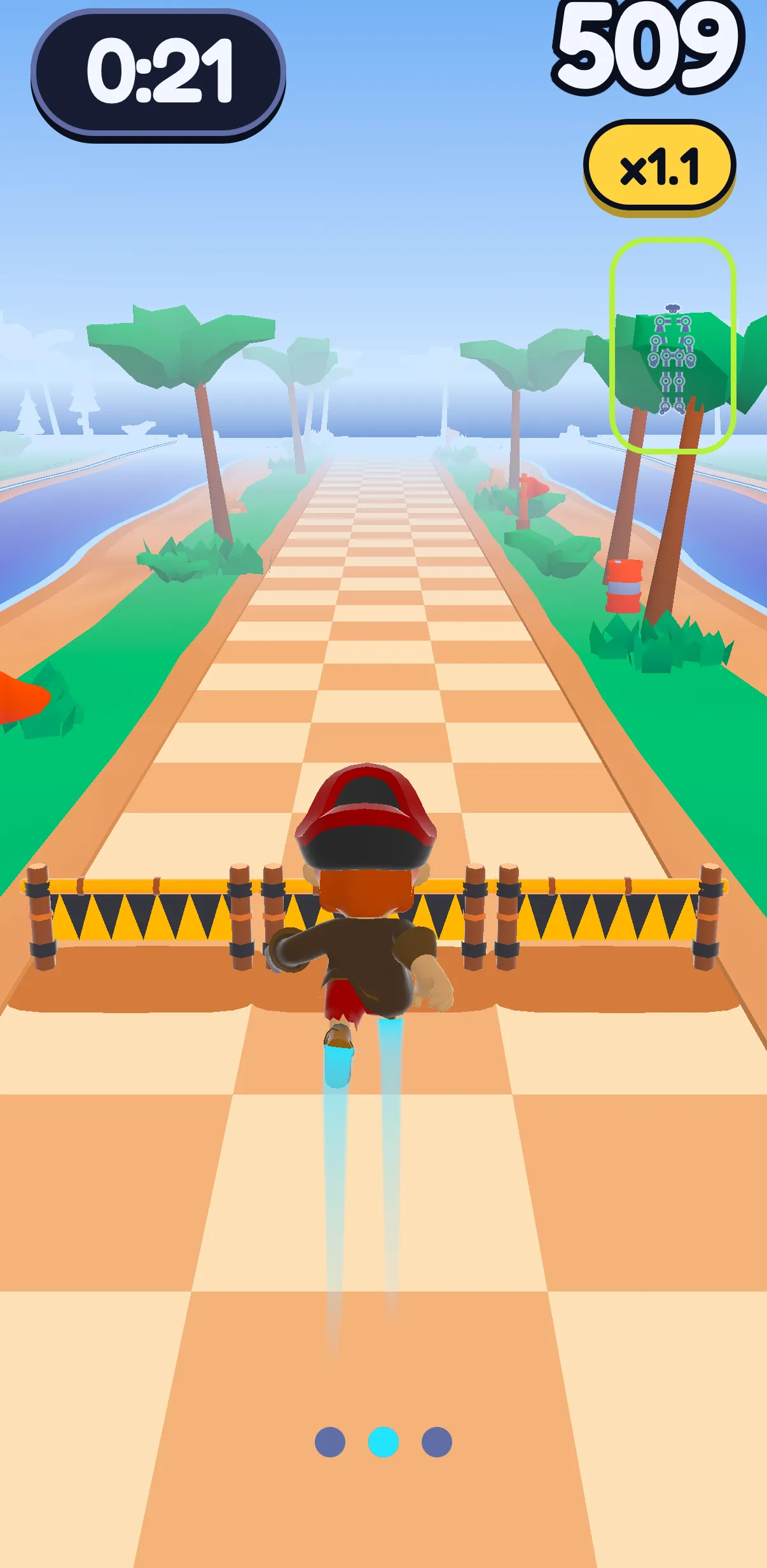
In the Runner, the track draws. A pirate races down three lanes: a low barrier means jump, a high gate means squat, a wall in your lane means step aside. Every run, the track draws its obstacles at random, like a fresh shuffle. It has house rules, like your deck: never two moves at once, never two full-width obstacles back to back, so you have time to stand up again.
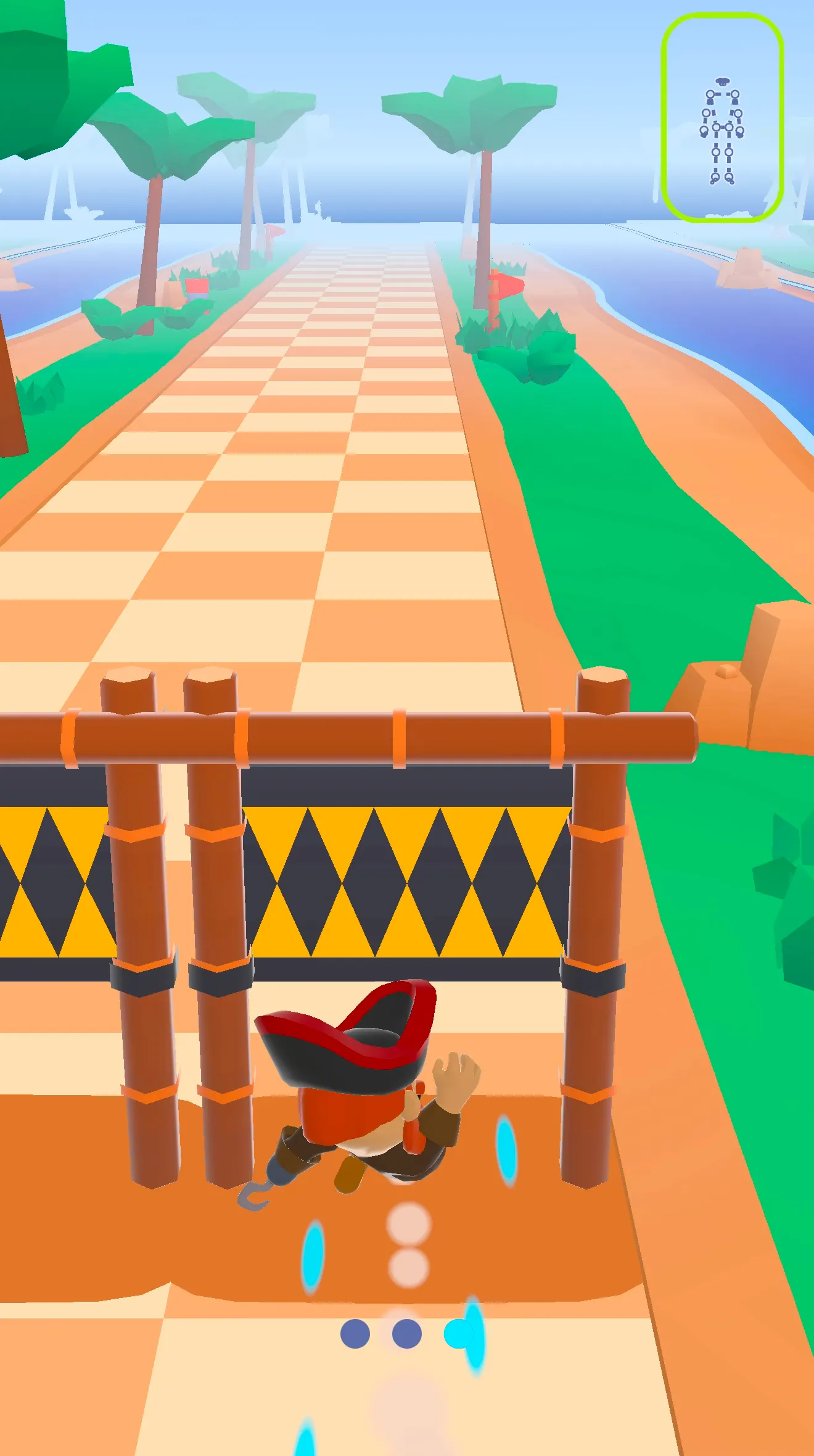
The camera checks. No card to round down: skip a jump or a squat and the obstacle hits you. In Timed, a hit just breaks your combo. In Elimination, it costs one of your three hearts. On your Profile, "This month" adds up your jumps, squats and push-ups: a running total, kept for you.
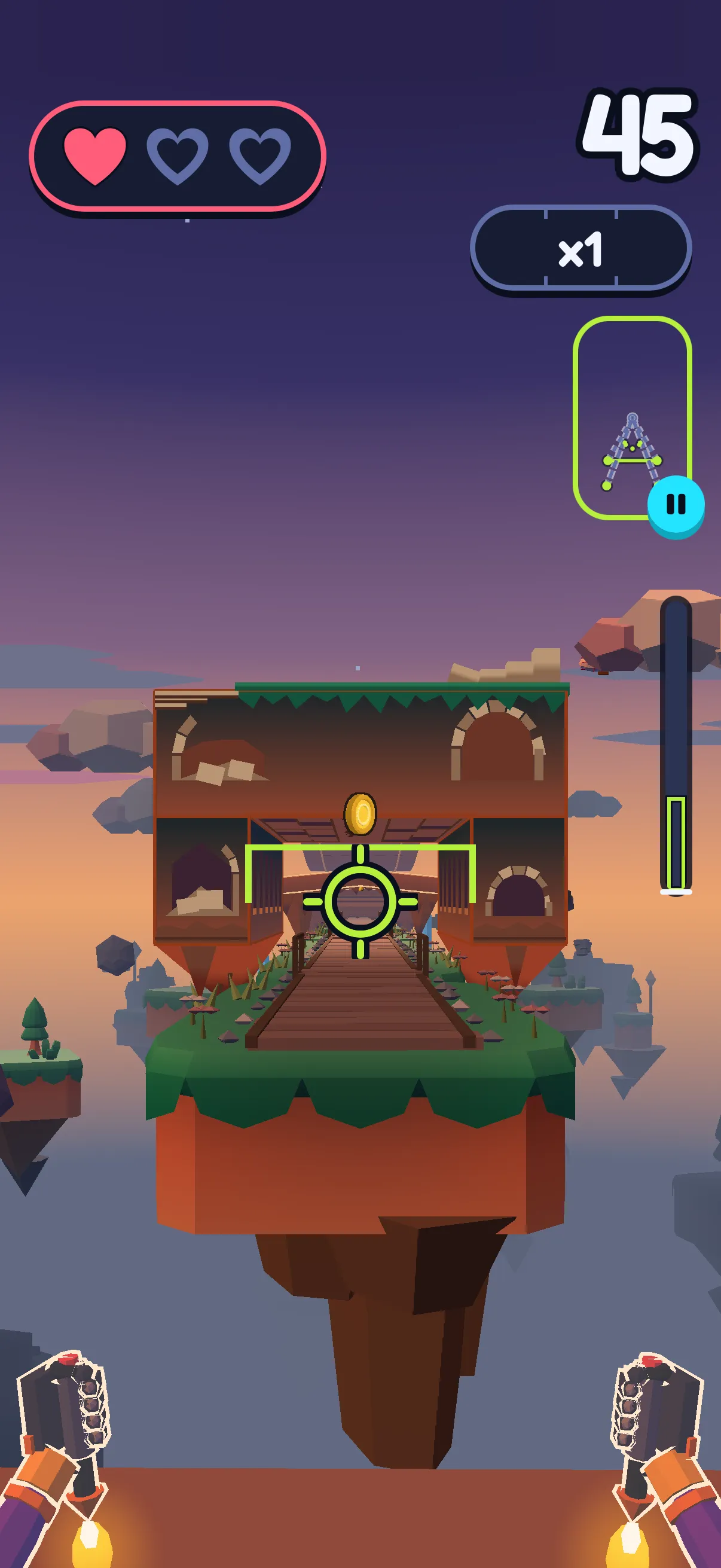
Push Flight, for the push-up deck. Stand your phone upright on the floor, hold a plank facing it, and go low or high to fly Sway, SWADE's weasel, through the gates. A full push-up counts as one, a shallower one as part of one, on your toes or your knees; straight arms never count. Your total shows at the end. Push Flight lives in the Play tab, not on the Path (the tab with SWADE's free daily session): each game spends one energy, which refills over time, and your first, a guided warm-up, is free.
What you don't choose.
- The moves. Jump, squat and side step in the Runner; push-ups in Push Flight.
- The reps. In the Runner, one obstacle, one move.
- The length. A Path session is a timed run in the Runner, sized to your level, and you see its length before you start. Chasing a record? In Elimination, you play until your last heart.
Knees or back? In Profile › Settings › Health, pick knees or back: barriers become walls you dodge with a side step, and the round starts on a squat. Squats stay, just as deep.
Your camera stays on your phone
In SWADE, the camera, the tracking and the counting of your moves run on your phone: no image, no video, not a single frame leaves it. What travels is a game's outcome: a score, your jumps, squats and push-ups. Two exceptions, while "Help improve SWADE" is on, as it is at first: a few numbers on how the camera followed you in Push Flight and, on Wi-Fi only, short samples of your moves drawn as a stick figure, never an image. You can switch it off. Details in the privacy policy.
What this guide doesn't cover
- Pain and rehab. For that, a doctor or a physical therapist.
- Calories and weight. We don't talk about them here.
- Decks for kids or school PE. SWADE is made for players aged 15 and up.
- Playing on a TV or computer. SWADE plays on the phone screen.
Sweat Deck, Deck of Cards Workout: Evolved, WOD Deck of Cards, Ross Training, Verywell Fit, Reddit, Google, App Store, Google Play, iPhone, iPad and Android are trademarks of their respective owners. SWADE is independent and is not affiliated with, sponsored or endorsed by any of them.
Frequently asked questions
What is the deck of cards workout?
Also called the 52 card workout or the playing card workout: a session where a shuffled deck sets the order. Each suit is a move, each card's value is the reps. Flip a card, do the reps, flip the next, until the deck runs out. Face cards and aces are worth what you decide; a common rule makes them 10 and 11.
Is the deck of cards workout good?
It's a simple format: a deck you probably own, almost no planning, and an order you can't predict, so you can't save yourself for the easy cards. Its limits: nobody checks your reps, and a full deck adds up fast. Pick moves you can do cleanly to the last card, and shrink the deck if you need to.
How many reps are in a deck of cards workout?
It depends on your rule. The numbers 2 to 10 make 54 reps per suit. With face cards at 10 and aces at 11, a suit is 95 reps and the deck 380. With aces at 1: 85 and 340. Jokers add what you give them.
How many push-ups is a deck of cards?
With every card push-ups, face cards at 10, aces at 11 and no jokers: 380. With aces at 1: 340. Too many for now? Give push-ups one suit and other moves the rest, or shrink the deck. Push-ups on your knees are a fine place to start.
Is there a deck of cards workout app?
Yes. On October 20, 2026, we opened Sweat Deck (iPhone and iPad), Deck of Cards Workout: Evolved and WOD Deck of Cards (iPhone, iPad and Android). They shuffle, flip and keep stats, and Evolved can pick exercises at random; none of their listings says they see your reps. SWADE, a camera game, picks the moves and checks them, but you can't choose them, and it isn't in the stores yet.
How long does a deck of cards workout take?
There's no set length: it depends on your moves, your rule and your pace. In the classic version, the deck is the clock: you're done at the last card. Want it shorter? Shrink the deck rather than rushing the reps.
Is SWADE free?
Yes. The day's session is free, with XP and your streak. Playing more spends energy, which refills over time. Premium is optional: unlimited energy and unlimited day savers, and the yearly plan starts with a 14-day free trial. Push Flight is played from Play, so each game spends one energy; your first, a guided warm-up, is free. SWADE isn't in the stores yet: it's coming to iPhone and Android.